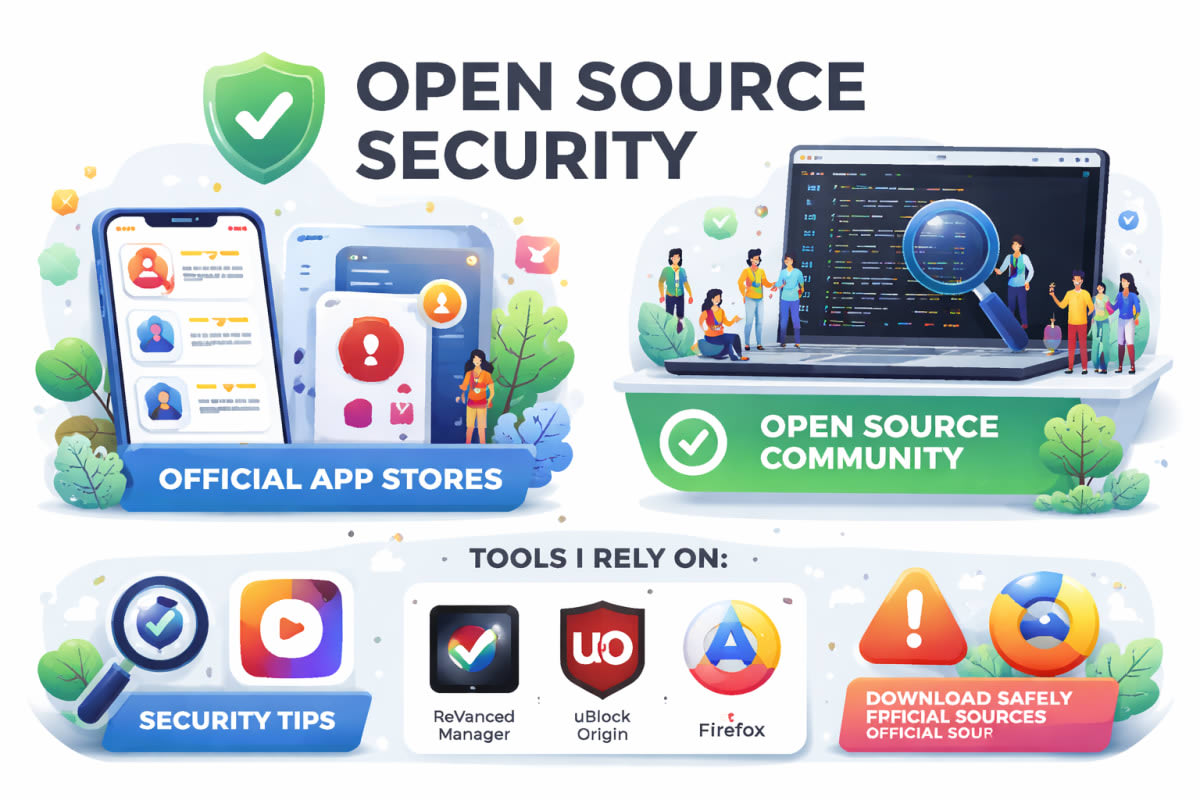
Let's talk about something most people get wrong about software security. When you try to download an app and see those scary warnings like 'This file may be harmful,' your first instinct is probably to think, 'Nope, this is definitely a virus' and close the browser. So people trust official platforms like Google Play Store, Microsoft Store, or Apple’s App Store instead. But here’s the reality: even these official stores have distributed malware, spyware, and data-stealing apps. Even apps with millions of downloads have later been found quietly collecting user data or showing intrusive ads after an update, long before being removed. There have been cases where apps initially passed store security checks but activated malicious behavior weeks later, exploiting permissions users had already granted. Yes, they eventually fix the issue—but sometimes weeks or months later. By then, thousands of users may already be affected.
Why Open Source Feels Different
Open source changes everything. The entire codebase is public—anyone can inspect it, review it, test it, and report issues. Thousands of developers worldwide act as independent reviewers. If something suspicious exists, it’s usually caught fast. Compare that to closed-source apps, where only a company’s internal team knows what’s happening behind the scenes. Which model feels more trustworthy?
That said, exercise caution with brand-new open source projects. They might lack a large community yet, so bugs or vulnerabilities could slip through initially without quick detection. Start with established ones to minimize risks, and always verify before diving in.
However, the speed of detection and fixing is usually far better than traditional app ecosystems.
What I Actually Use
- ReVanced Manager: A community-driven open source project that enables premium-like YouTube features. The code is fully transparent, actively reviewed, and constantly updated by the community.
- uBlock Origin: A powerful open source ad and tracker blocker. I’ve used it for years with zero security concerns.
Do these tools break company terms of service? Possibly. But enforcement usually targets projects, not users.
My Preferred Alternative
- Firefox instead of Chrome: Privacy-focused, highly customizable, and built for users—not data collection.
Open source isn’t only about security. It’s about freedom, transparency, and trust. Knowing exactly what runs on your device brings peace of mind.
Staying Safe with Open Source
✓ Download only from official websites or verified GitHub repositories ✓ Check project activity and recent updates ✓ Use AI tools to research project safety quickly ✓ Avoid fake or cloned versions
Final Thoughts
Open source has changed how I use technology. I feel more in control, more secure, and less dependent on corporate ecosystems. The code is transparent, communities are active, issues are fixed quickly—and it’s genuinely free.