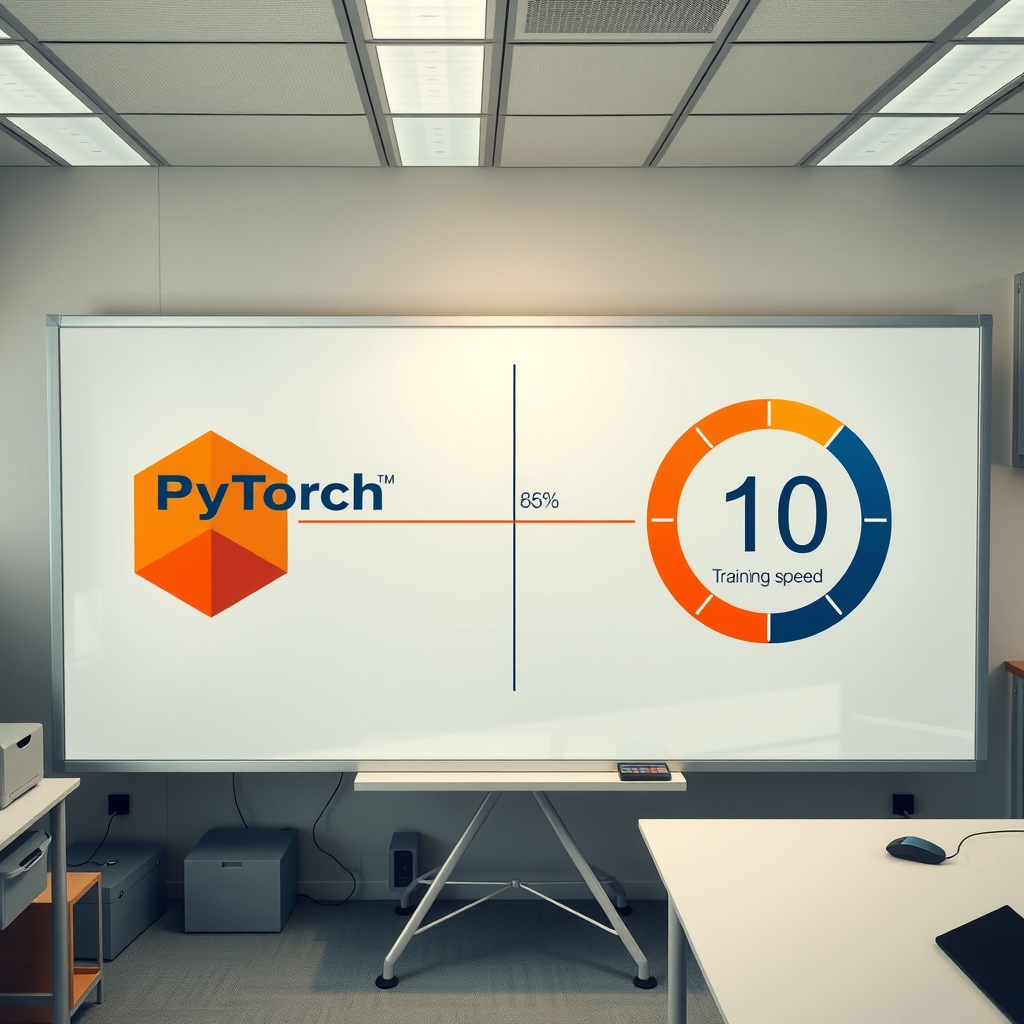
PyTorch Leads AI Research While TensorFlow Trails by Ten Percent Training Speed Gap
PyTorch dominates AI research in 2026, capturing roughly 85 percent of the research share according to a recent test by tech‑insider.org. The study compared usage across leading labs and found PyTorch’s flexible design and community support drive its popularity among scientists developing new models.
TensorFlow trails behind, showing a training speed gap of about ten percent slower than PyTorch in the same benchmark tests. The performance difference was measured on standard datasets, highlighting efficiency concerns for developers who prioritize faster model training cycles.
AI Community notes that the gap may influence framework selection, with researchers favoring PyTorch for experimental work while some enterprises still rely on TensorFlow for production stability. The findings could shape future investment in tooling and education as the AI field evolves.
Framework Developers are responding by optimizing libraries, with both PyTorch and TensorFlow releasing updates aimed at narrowing the speed gap and expanding research‑friendly features. Ongoing competition is expected to drive further performance gains and maintain diverse options for developers across academia and industry.